Heavy records are not loud because someone turned a fader up at the end. They sound powerful because the drums were tuned and played with control, the guitars were tight and doubled well, the bass was clear underneath, and each part left room for the others. Mixing and mastering can emphasize that power. They cannot create it from weak recordings.
This guide covers how metal, punk and rock productions are tracked in a studio, from pre-production to vocals. If you are a band looking for a metal recording studio in Virginia, it will help you ask better questions and show up better prepared.
Start with pre-production
The cheapest hour of any heavy session is the one spent before it. Dense, fast music hides mistakes in a rehearsal room and exposes them on a recording.
Work out tempos with a click and agree on them. Heavy music often speeds up through choruses and slows into breakdowns. That energy may feel good live, but it complicates editing and layered guitars. If the band will not play to a click, tell the engineer early so the plan can change.
Cut dead weight from arrangements. A riff that repeats eight times may need four. Two guitars playing the same part in unison sound huge, and a third part under them may only add mud. Record a rough demo on a phone or a laptop and listen back. The parts that are unclear in the demo will be unclear on the record.
Finally, agree on the reference points. Choose two or three records whose drum sound, guitar weight or vocal attitude you want, and note what exactly appeals to you. Those notes are more useful than genre labels.
Drums: the foundation of a heavy record
Tuning and preparation
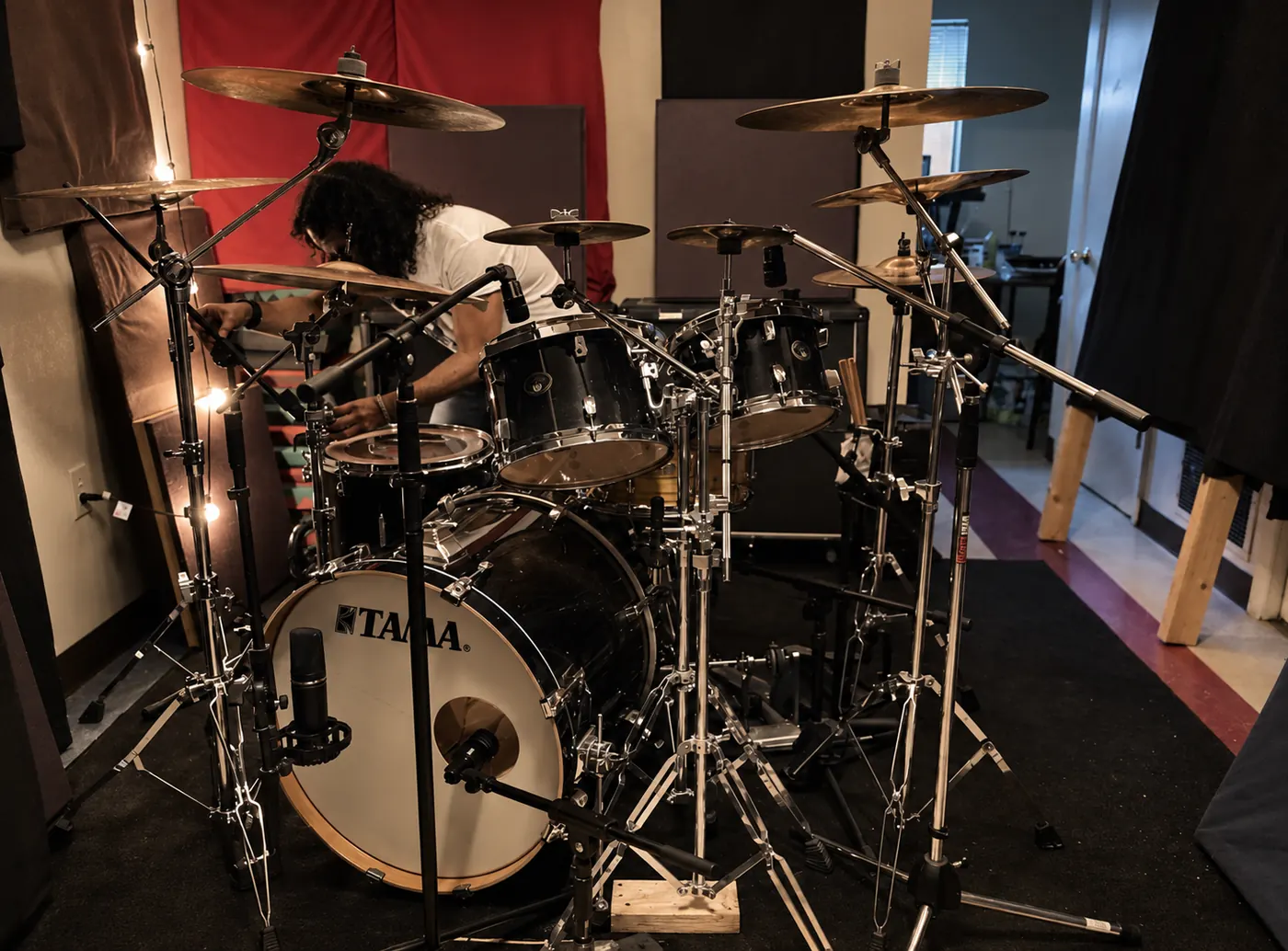
Drums are tracked first in most band sessions, and nothing downstream recovers from a poor drum sound. Shure's guide to recording drums starts with the instrument itself: good results begin at the source, tuning is a real skill, and old heads can be very hard to tune, so consider replacing them first. Specialist dampers can help control excess ringing if you want a drier sound. Worn heads and untuned toms produce sustain that clashes with the guitars and bass.
Bring fresh heads and bring them early enough to stretch and settle. Bass drum, snare and toms each need their own tuning. A snare that sounds good in a rehearsal room can sound thin or ring badly once microphones get close, so expect adjustments on the day.
Microphone placement
Shure's drum recording series describes the standard approach of close microphones on each drum plus overhead microphones to capture the kit as a whole. For heavy music the close microphones carry most of the impact, while the overheads provide cymbals and a sense of the kit's size. A second microphone on the snare, a microphone inside or just outside the kick drum, and microphones on every tom are common practice.
Two details matter more than the microphone model. The first is distance and angle. Moving a snare microphone a few centimeters changes how much attack and body you capture. The second is phase. When several microphones hear the same drum, their signals can partly cancel each other, and the kick or snare loses weight. Shure's method is to check phase on headphones: bring up the kick, then each other track in turn while flipping its polarity, and keep the setting that sounds bigger and fuller. The snare's top and bottom microphones are usually out of phase with each other, so one of them is typically flipped.
Fast playing, editing and triggers
Fast double-kick passages need a clean performance first. If the drummer's hits are uneven, quantizing will not fix feel. Many engineers edit drums to tighten timing and level out hits, and some blend recorded samples with the original drum sound to add consistency. This is a legitimate part of modern heavy production, but it works best when it supports a strong performance. Tell the engineer how natural you want the kit to sound, because the right amount of editing differs for a punk record and a modern metal album.
Guitars: tight, heavy and clear
Gain is not weight
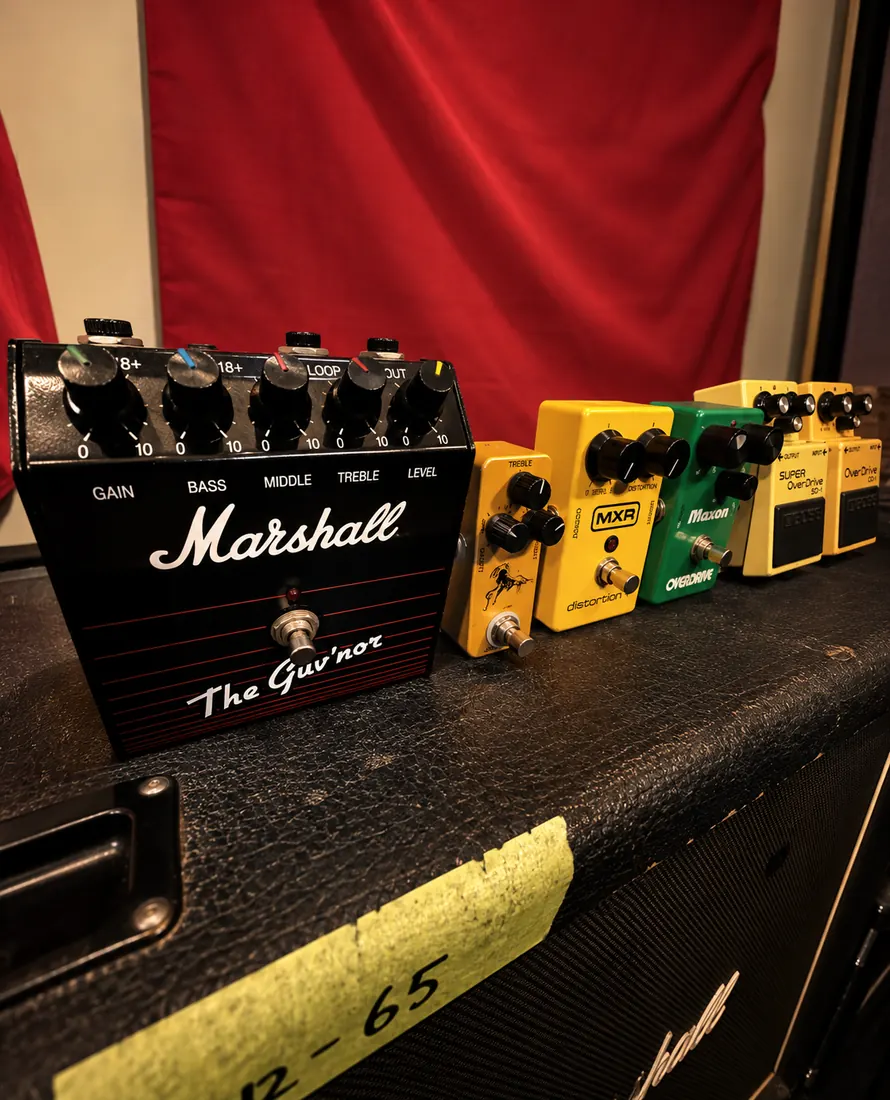
Beginners often chase heaviness with more gain. In practice, too much gain smears the pick attack and turns palm-muted riffs into noise. Many heavy tones are recorded with less gain than the player uses live. The guitar still sounds massive because the note definition is strong and the low end is controlled.
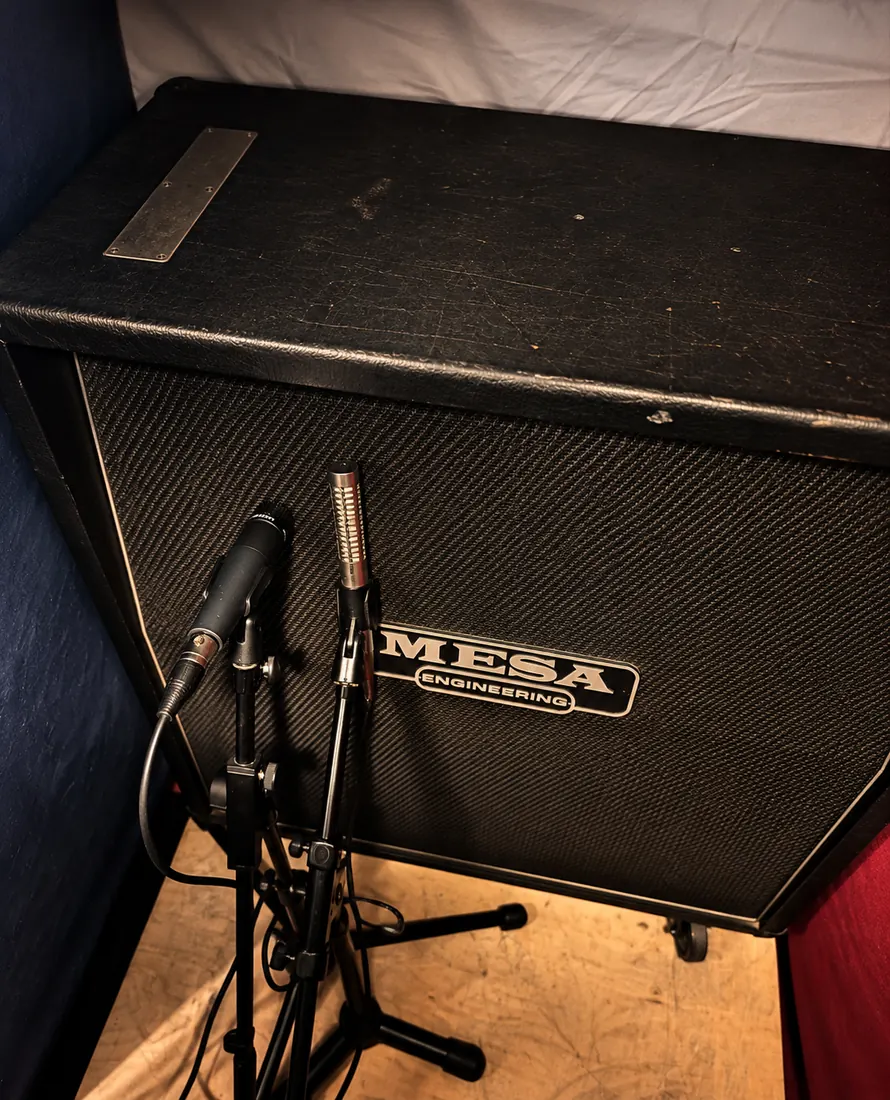
Shure's guidance on choosing microphones for guitar explains how placement on the speaker changes the tone. Moving the microphone toward the center of the speaker adds brightness and clarity, while moving it outward adds bass and warmth and makes the sound more diffuse. Distance from the amplifier changes how much room sound the microphone captures: the farther away it sits, the more room tone you hear. Engineers often combine two microphones to build a tone that works for the song, balancing the bright and dark positions.
Doubling and layering
Heavy guitars are almost always doubled. Paul White's Sound On Sound article on doubling for thicker sounds explains the idea: you record the same part twice as separate performances, and the small natural differences in timing and pitch widen and thicken the sound compared with copying one take. The article also warns that stacking too many layers can blur note onsets and weaken the sound. Panning the two takes left and right creates the familiar wall of guitars.
A few rules help:
- Play each pass fresh. Copy and paste is not the same as a real double.
- Keep the performances tight. Doubling exposes sloppiness faster than any other technique.
- Use the same guitar and amplifier setting for both passes unless you want a deliberate difference.
- Add a third or fourth layer only for contrast, such as a cleaner tone for a chorus.
Re-amping and DI
Recording the guitar through a direct input (DI) alongside the amplified signal gives the engineer an option later. If a performance is excellent but the tone needs to change, the DI can be sent through another amplifier, which is called re-amping. It works best when the amplifier and microphone chain were chosen deliberately on the first pass, because a DI recording is a safety net, not a replacement for a good tone at the source.
Bass: the part that holds everything together
Bass guitar is often the weakest link in a heavy mix because it sits in the same low frequencies as the kick drum and the lowest guitar notes. A common solution is to record a DI signal and an amplified signal together. The DI gives clarity and consistent low end. The amplifier adds grit and midrange character that helps the bass be heard on small speakers.
Playing matters here as well. Tight, even playing with a consistent pick or finger attack is easier to mix than uneven playing. The bass player should also know the guitarists' parts, because bass notes that land with the kick pattern make the whole rhythm section sound locked together.
Vocals: attitude without losing intelligibility
Vocals in heavy music range from clean singing to screams to shouted gang parts. Each style needs a different approach.
For screamed and harsh vocals, the main risk is fatigue. Warm up, hydrate and record in short blocks. A vocalist who tracks in the first hour usually sounds stronger than one who tries to finish a whole album in a day. For gang vocals, record several passes with different people and layer them, so the chorus has the sound of a group rather than a single voice copied.
Keep lyrics available in the room and agree on delivery notes in advance. If words matter to the band, the engineer can keep them readable in the mix. If texture matters more, the vocal can be treated as another instrument.
Room and isolation
Loud sources spill into every microphone. Good studios control that spill with separate rooms or booths, gobos (movable absorbent panels) and thoughtful microphone placement. If everyone plays together in one room, expect some bleed and plan for it. A band that tracks drums first with a guide guitar and then re-records guitars and bass separately usually gets cleaner results than one recording live with everything open.
Live tracking has its own value. Punk and rock records often benefit from the energy of the band playing together, and some bleed adds to the sound. The decision is a creative one. A good engineer can describe the trade-off and help you choose.
How this fits the mixing stage
What you record shapes what can happen later. Clean drum tracks with controlled bleed give a mixing engineer room to balance transients and sustain. Well-separated guitars and bass keep low-frequency masking in check. If you plan to hand the project to another engineer for mixing, ask your recording engineer to export labeled stems and a rough balance, and keep a log of any edits. Our article on analog vs. digital mixing explains what happens next in the chain and how those choices shape the sound.
Working with Yave Rust
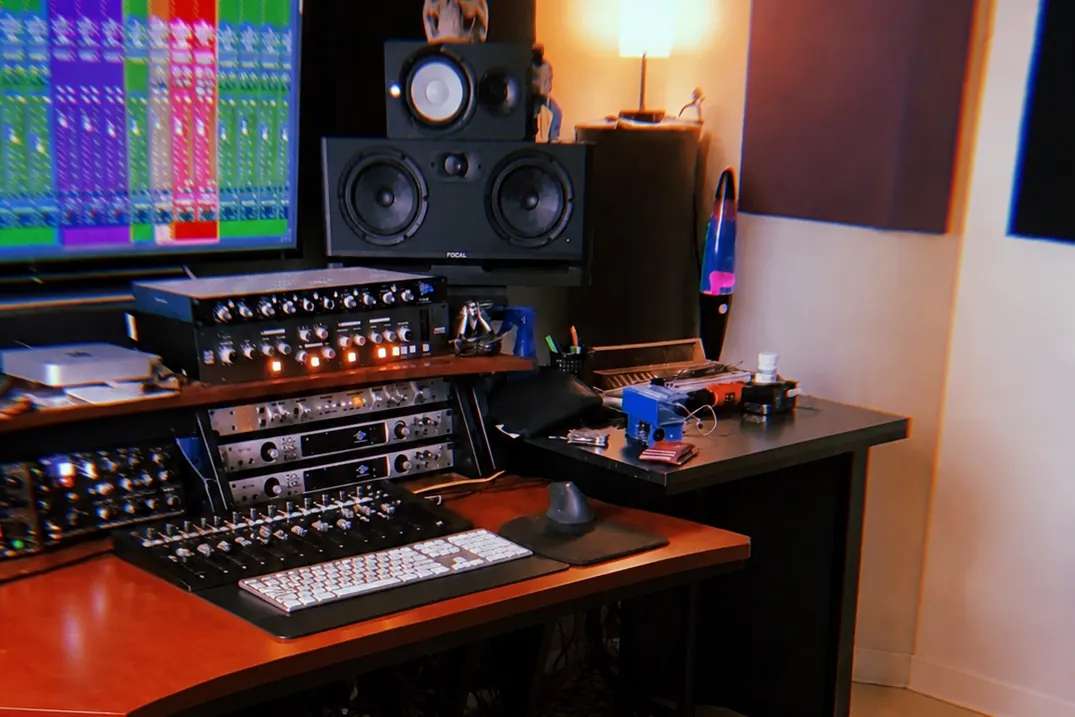
Yave Rust Recordings works from Richmond, Virginia, and the website lists the studio's microphones, amplifiers, cabinets and outboard gear in detail. Heavy music is part of the catalog, and the works section shows releases where the engineer's role is stated for each one. Equipment varies by project, so the first conversation should cover your genre, your lineup and what you want the record to do. You can also read our guide to choosing a recording studio in Richmond if you are still comparing options.
If you are not in Richmond, you can still record elsewhere and send the tracks for mixing. The online mixing and mastering article describes how that remote process works.
Frequently asked questions
Should a metal band record live together or one instrument at a time?
Either approach can work. Tracking drums first and layering guitars, bass and vocals produces the cleanest separation and is the most common method for dense, high-gain music. Live tracking suits punk and rock where the energy of a performance matters more than isolation.
How many guitar tracks do I need?
Two takes of each rhythm part, panned left and right, is the standard starting point. More layers can add weight, but extra tracks do not fix poor performances, and they take space away from bass and vocals.
Do I need to use a click track?
For most modern heavy music, yes. A click makes editing, layering and sample reinforcement far easier. If your style relies on natural tempo movement, discuss alternatives such as a tempo map with your engineer.
Can I fix a weak drum sound in the mix?
Some improvement is possible with editing, EQ and sample reinforcement, but the best results start with well-tuned drums and good microphone placement. It is faster and cheaper to fix the problem at the source.
References
- Recording Drums: Part 1 – Setting up and Microphone Technique — Shure
- How to Choose the Best Mics for the Guitar — Shure
- Doubling For Thicker Sounds — Paul White, Sound On Sound