Most musicians choose a studio the way they choose a restaurant: they look at photos, skim a few reviews and hope. That works until the first session, when you discover the drums sound small in the live room or the engineer has never tracked a band that plays as loudly as yours.
A studio website can tell you what equipment exists. It rarely tells you whether the room, the monitoring and the person at the desk will turn your songs into a record. This guide covers what to check in a recording studio in Richmond, Virginia, before you book, and how to prepare so the hours you pay for go into the music.
Richmond's music scene and why it matters when you pick a studio
Richmond books a wide range of live music. Visit Richmond names The National and The Broadberry among the venues that draw big-name acts, and its venue guide describes The Broadberry as spanning every genre. The music page also points to local names including Spacebomb Records, Carbon Leaf and GWAR, and to the Richmond Folk Festival, which it says draws more than 200,000 people to the riverfront each October.
That variety is useful for one practical reason. A city with many genres has studios built around different jobs: some focus on singer-songwriter and acoustic work, some on hip hop production, some on loud guitar music. Before you compare prices, decide which job you are hiring a studio to do. A band that plays at full volume needs a different room, microphone locker and engineering approach than a solo artist tracking vocals over a laptop beat.
What a professional recording studio actually needs
The room comes before the gear
Microphones and preamps get the attention, but the room decides how much of what you play makes it to the recording. Paul White's Studio SOS guide to monitoring and acoustic treatment explains why: small rooms develop uneven bass because of room modes, and hard surfaces bounce mid and high frequencies back toward the microphones and the engineer's ears. Treatment is placed at first reflection points and in corners, where bass trapping is most effective.
You do not need to inspect the studio like an acoustician, but you can ask three questions. How is the tracking room treated? Can the drums be recorded without the cymbals washing over every other microphone? Is the control room treated well enough that the engineer hears the same low end you will hear at home? Vague answers are a warning. A confident engineer can describe what the room does well and what it does badly.
Monitoring you can trust
An engineer can only fix what they can hear. Ask which monitors are used for tracking and mixing, and whether a second, smaller reference system is available. A pair of full-range monitors tells you about low-end balance; a small, familiar speaker tells you whether the mix will survive a laptop or a phone. Studios that check mixes on more than one system usually deliver mixes that travel better.
Signal path and conversion
The signal path is the chain from microphone to preamp to converter to recording software. You do not need to know every brand, but you should know whether the studio runs a clean, consistent chain and whether it has options when a source needs character. A bass amp, for example, may want a different treatment than a vocal, and a studio with a selection of preamps and processors can make that choice on purpose instead of by default.
The engineer matters more than the equipment list
Two people can work with the same console and microphones and produce very different records. What you are buying is judgment: where to place a microphone, when a take is good enough, how to keep a drummer comfortable through the fortieth pass, and how to fix a problem before it becomes a mixing problem.
Ask to hear records the engineer recorded, not only mixed. Listen for the things that cannot be fixed later: drum tone, how the guitars sit against the bass, whether vocals feel present without being harsh. Ask what the engineer's role was on each record, because credits vary. Yave Rust's own site makes this distinction openly: roles on the listed releases vary between recording, mixing and mastering, and the credits are meant to be checked against each official release.
Analog, digital and hybrid: what to ask
Studios usually describe themselves as analog, digital or hybrid, and the label alone says little. What matters is whether the workflow serves your project. A digital recording chain with high-quality conversion is fast, recallable and precise. Analog processors add the behavior of real circuits: transformers, tubes or discrete electronics reacting to the signal, which some engineers use for tone and dynamics on the way in or during mixing.
The better question is how the studio uses each side. Does it track through hardware preamps and compressors, or only use them in mixing? Can sessions be recalled later for revisions? Hybrid studios, which combine a digital audio workstation with analog outboard, often give the most flexibility, because decisions can be made with either tool. For a deeper look at the tradeoffs, read Analog vs. Digital Mixing: What Really Makes a Record Sound Better?
Rock, punk and metal need specific answers
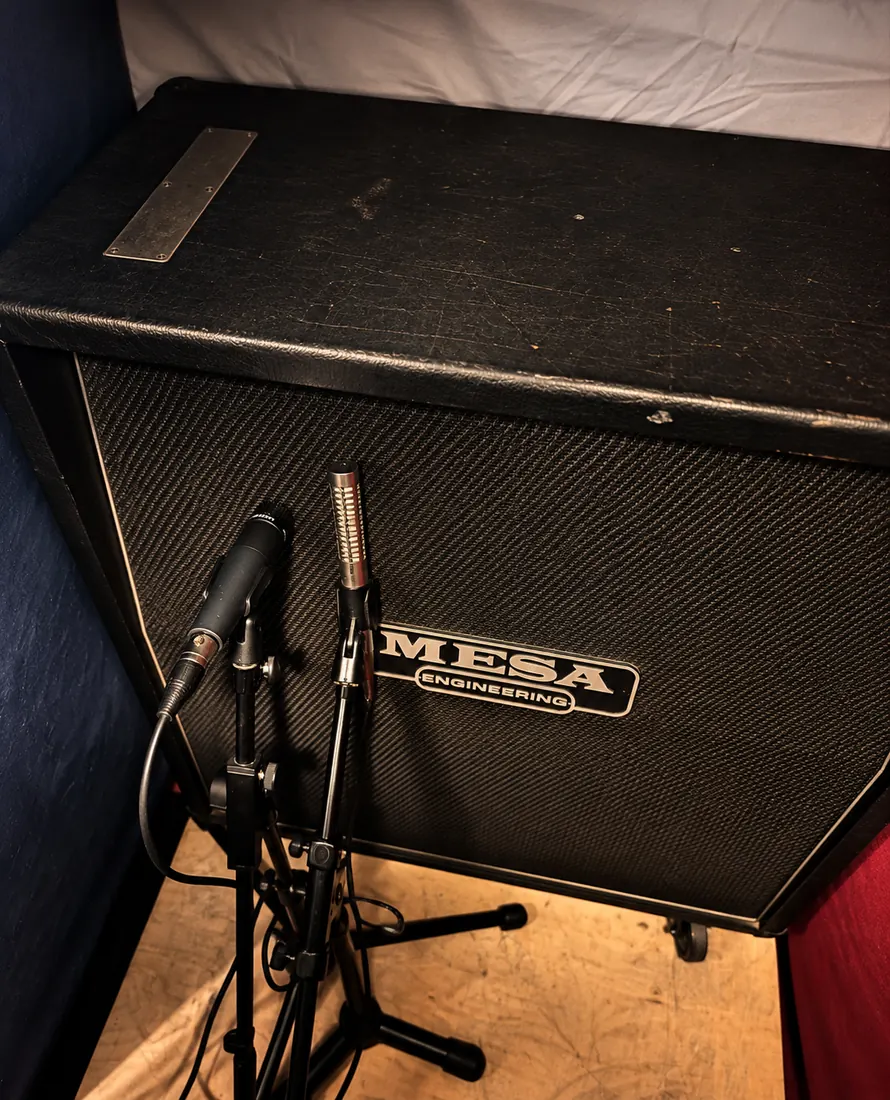
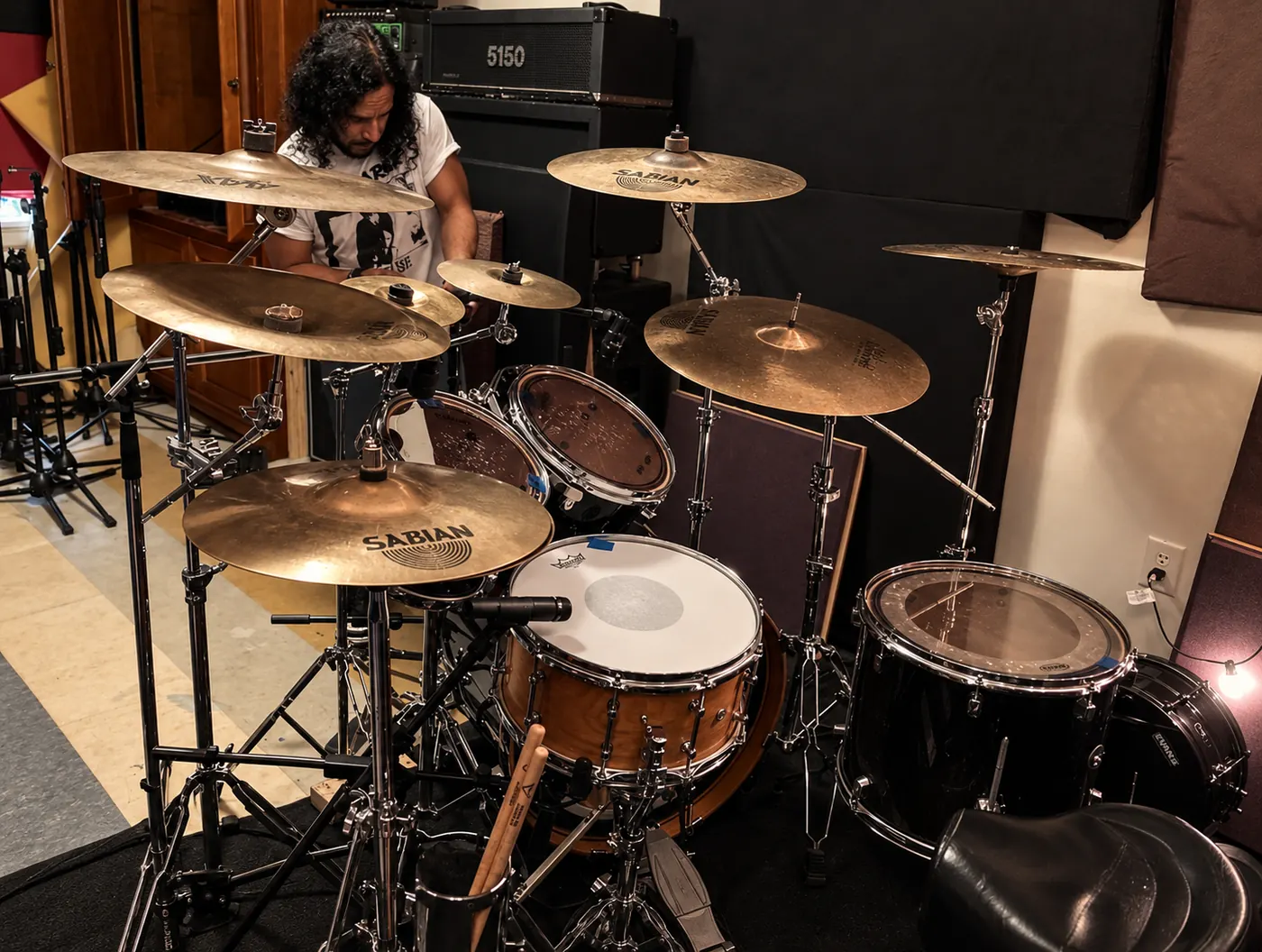
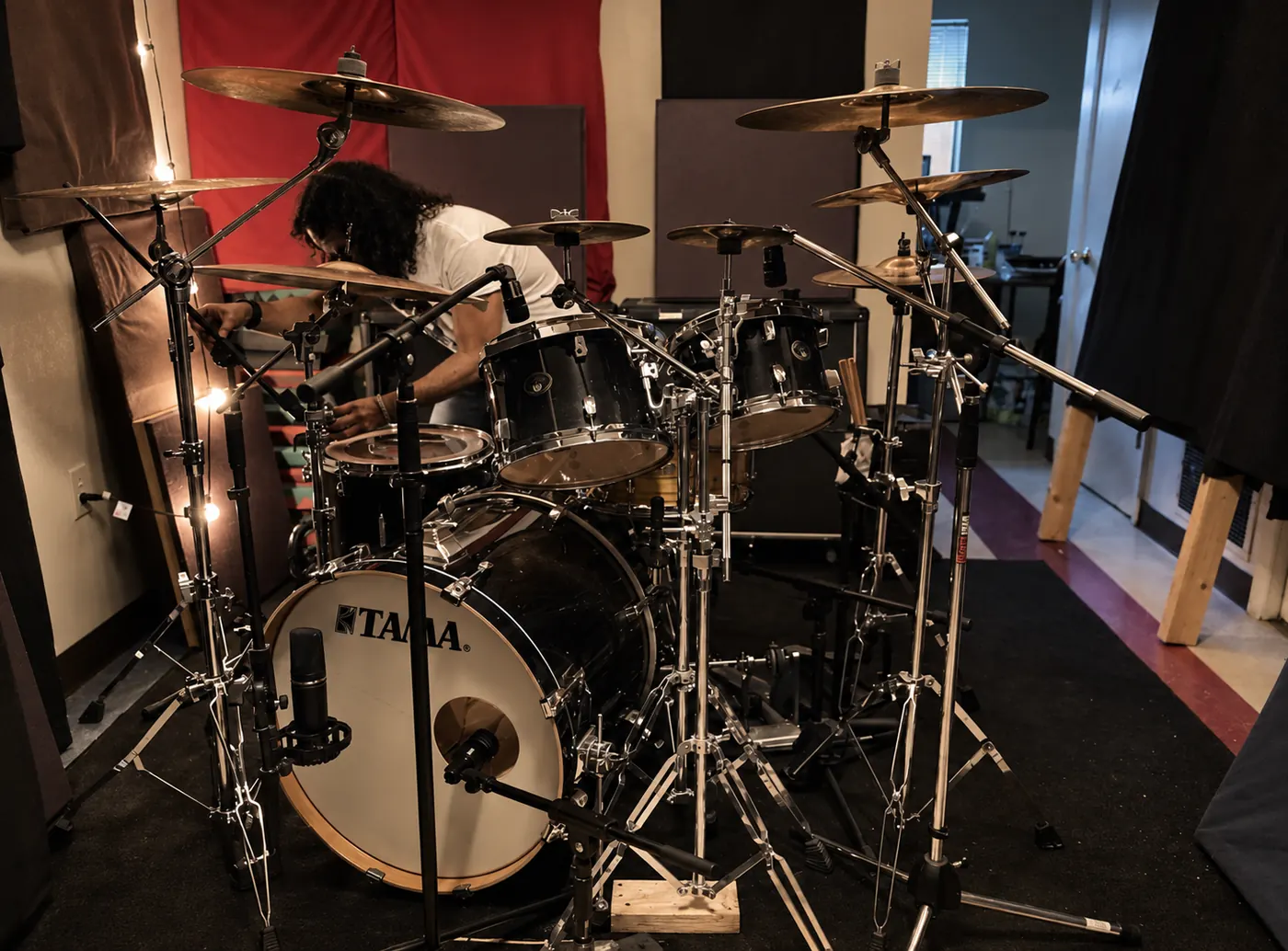
Loud music exposes weaknesses quickly. High-gain guitar amplifiers, fast double-kick patterns and dense low end punish poor rooms, tired drum heads and sloppy tuning. When you contact a studio, ask how it records amplifiers (single microphone, multiple microphones, which cabinets), how drums are tuned and miked, and how the engineer manages bleed between instruments. If you play heavy music, look for records in that style in the engineer's portfolio rather than assuming general experience carries over.
Our guide to recording heavy music goes through drums, guitars, bass and vocals in detail, so you can judge answers when you get them.
A studio selection checklist
Use this table when you compare two or three studios. The aim is not to find a perfect score but to spot the gaps that matter for your project.
| Question | Why it matters | A good sign |
|---|---|---|
| Who will be the engineer on my sessions? | The person at the desk shapes the result more than the equipment list | You can talk to them before you book |
| What records has the engineer recorded in my genre? | Style experience affects drum tone, guitar capture and arrangement choices | Specific releases you can listen to, with roles stated clearly |
| How is the room treated? | Untreated rooms add reflections and uneven bass | A plain description of the treatment and its limits |
| Which monitors and references are used? | Mixes are only as accurate as the monitoring | More than one monitoring system |
| What microphones, preamps and processors are available? | Options let the engineer match tools to sources | A mic locker that covers drums, guitar and bass amps, and vocals |
| What happens after tracking? | Editing, mixing and mastering affect the final record | A clear plan, with each stage priced or scoped separately |
| How are revisions handled? | Mix feedback is normal | A defined number of revision rounds before work begins |
| What files do I receive? | You own the record only if you can use the files | Clear deliverables, including the session audio if agreed |
How to prepare before you book
Preparation is the cheapest way to improve a session. These steps help most.
Rehearse to a click if you plan to record to one, and settle the tempo of each song in advance. Changing a tempo after tracking is expensive and often audible.
Fix your instruments before the date. Replace drum heads, change guitar and bass strings, check intonation and make sure amplifiers do not buzz. A fresh set of strings is a quicker improvement than any plug-in.
Bring a demo and two or three reference tracks. Tell the engineer what you like about each one, such as the weight of the snare, the width of the guitars, or how upfront the vocal is. References describe a target in a way adjectives cannot.
Decide the song order and how many songs you can realistically finish. Quality drops when a band tries to record ten songs in the time that suits four. If you are weighing how many hours to book, our article on what it costs to record a song in Richmond explains how studios structure their quotes.
Finally, ask who handles mixing and mastering and whether they are included in the quote. Many projects stall because the budget covered tracking and nothing else.
Yave Rust's approach
Yave Rust Recordings is a recording and mixing project based in Richmond, Virginia, working with artists around the world. The website describes a workflow that combines current digital tools with analog hardware, and lists the studio's equipment openly. The analog hardware includes API, SSL and Trident processors, Rupert Neve Designs 542 tape emulation modules and a range of microphones from Shure, Audix, Sennheiser, AKG and others. Monitoring and conversion include Focal Alpha Twin Evo and Yamaha HS5 monitors and a Universal Audio Apollo x6, and the work runs in Pro Tools.
The site also lists guitar and bass amplifiers and cabinets, and credits mastering collaborations with Jack Control and Maor Applebaum at Enormous Door Mastering. You can see the full inventory in the studio gear section and listen to selected releases in the works section. What equipment is used on a given project depends on the music, so the best first step is a short conversation about your songs, your genre and what you want the finished record to do.
Frequently asked questions
How early should I book a recording studio?
Contact the studio as soon as you have a rough date and a song list, then confirm scheduling once you know how many songs you will record. Availability is project specific, so ask directly instead of assuming a calendar.
Should I visit the studio before booking?
If you are local, yes. Listen to a reference record on the studio monitors and talk through your project with the engineer. If you are traveling or working remotely, a call plus sample work in your genre gives you much of the same information.
Do I need a producer as well as an engineer?
Not always. An engineer captures and shapes sound. A producer also guides arrangement, performance and song decisions. Ask the studio what role the engineer will play on your project so expectations are clear from the start.
Is a hybrid analog and digital studio better than an all-digital one?
Neither is automatically better. What matters is whether the workflow suits your music and whether the engineer uses the tools with intent. Hybrid setups mainly add options.
References
- Richmond Live Music & Concerts — Visit Richmond
- Music Venues in Richmond, VA — Visit Richmond
- Studio SOS Guide To Monitoring & Acoustic Treatment — Paul White, Sound On Sound
- Recording Drums: Part 1 – Setting up and Microphone Technique — Shure